GABA Receptor
Gamma-aminobutyric acid Receptor; γ-Aminobutyric acid Receptor
GABA receptors are a class of receptors that respond to the neurotransmitter gamma-aminobutyric acid (GABA), the chief inhibitory neurotransmitter in the vertebrate central nervous system. There are two classes of GABA receptors: GABAA and GABAB. GABAA receptors are ligand-gated ion channels (also known as ionotropic receptors), whereas GABAB receptors are G protein-coupled receptors (also known asmetabotropic receptors). It has long been recognized that the fast response of neurons to GABA that is blocked by bicuculline and picrotoxin is due to direct activation of an anion channel. This channel was subsequently termed the GABAA receptor. Fast-responding GABA receptors are members of family of Cys-loop ligand-gated ion channels. A slow response to GABA is mediated by GABAB receptors, originally defined on the basis of pharmacological properties.
All Product Categories
-
GABA Receptor Inhibitors
(152)
View all products
-
GABA Receptor Agonists
(189)
View all products
-
GABA Receptor Antagonists
(136)
View all products
-
GABA Receptor Activators
(69)
View all products
-
GABA Receptor Modulators
(93)
View all products
-
GABA Receptor Controls
(4)
View all products
-
GABA Receptor Ligands
(16)
View all products
-
GABA Receptor Related Products (777)
Related Products (777)

-
Antibodies (14)
-
Related Compound Screening Libraries (1)
-
2-Hydroxysaclofen
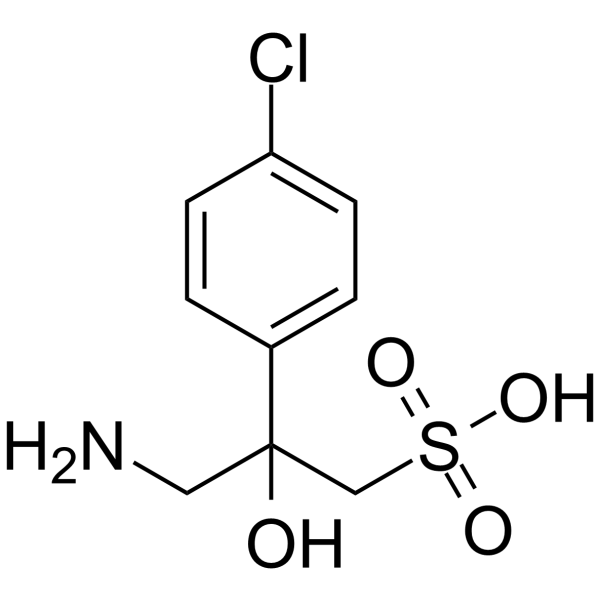 0 Images2-Hydroxysaclofen is a potent γ-amino-butyric-acid-B (GABAB) receptor antagonist. 2-Hydroxysaclofen can abolish nicotine-induced hypolocomotor effects and increases the antinociceptive effects. 2-Hydroxysaclofen can stimulate luteinizing hormone (LH) secretion in female rats.
-
CL 218872
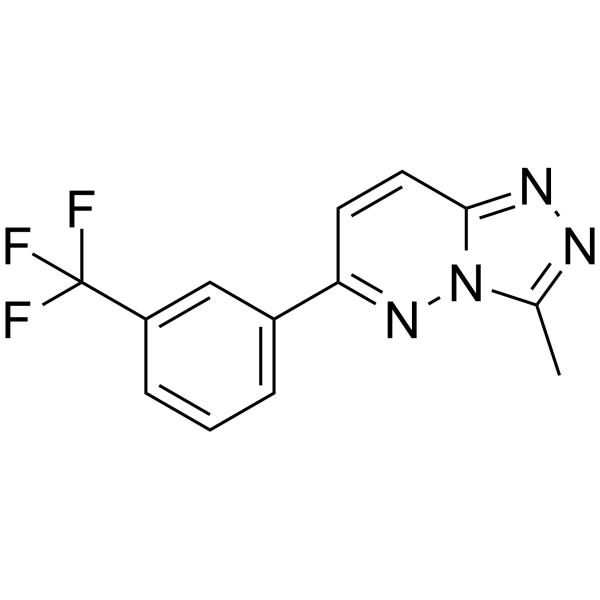 0 ImagesCL 218872 is an orally active and selective ligand for the benzodiazepine receptor subtype BZ1. CL 218872 exhibits anxiolytic, sedative and anticonvulsant activities. CL 218872 can be used in researches of anxiety related disorders and epilepsy.
-
Methionine-d4
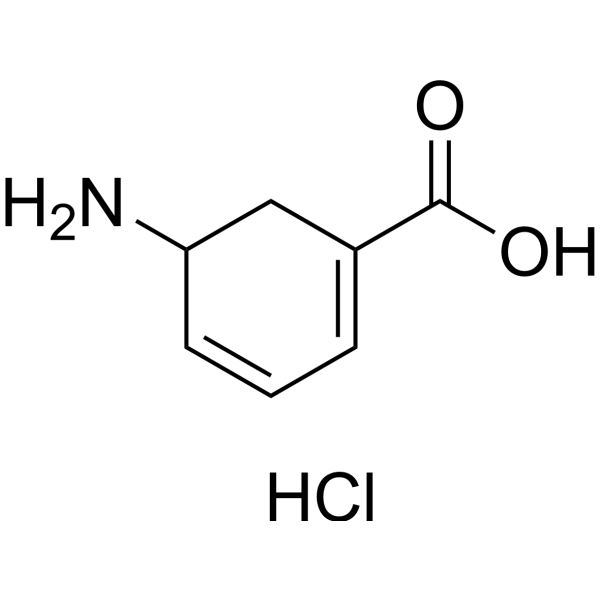
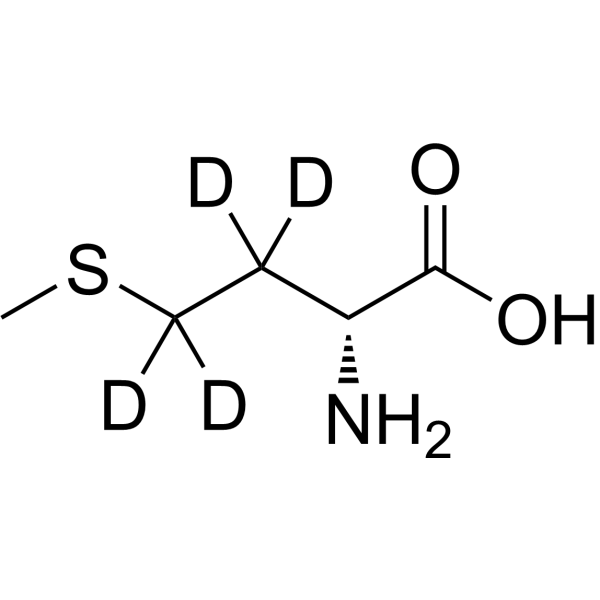 0 ImagesCat. No.: HY-13694S1Purity: 98.04%Synonyms: MRX-1024-d4; D-Methionine-d4Methionine-d4 is the deuterium labeled Methionine. Methionine (MRX-1024; D-Methionine) is an effective chemoprotective agent which can also inhibit the neuronal activity through GABAA receptor activation.
-
6-Aminonicotinic acid
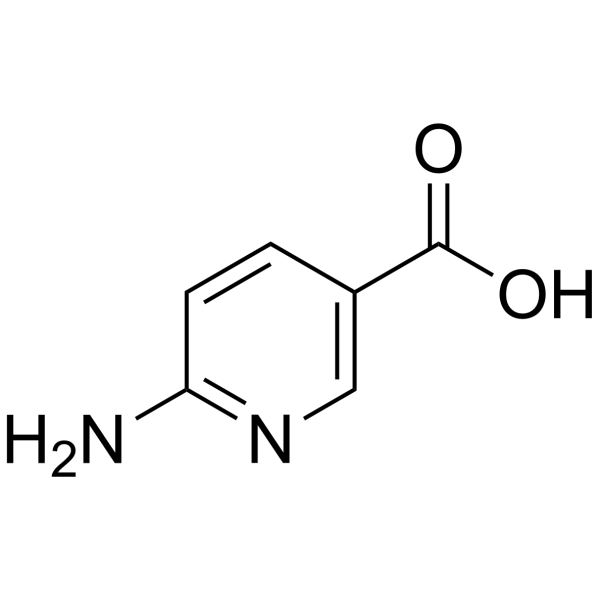 0 Images6-Aminonicotinic acid is an analog of Niacin (HY-B0143) and also a GABAA receptor agonist with a Ki value of 4.4 μM in rats. 6-Aminonicotinic acid binds to both native and recombinant GABAA receptors, is metabolized into non-functional pyridine nucleotide analogs to inhibit dehydrogenases, and suppresses the proliferation of T2 bacteriophages. 6-Aminonicotinic acid accumulates in specific bacterial cells in the form of pyridine nucleotide analog metabolites. 6-Aminonicotinic acid can be used in research related to neurological disorders such as anxiety, epilepsy and schizophrenia, and also serves as an intermediate in organic synthesis.
-
DMCM hydrochloride
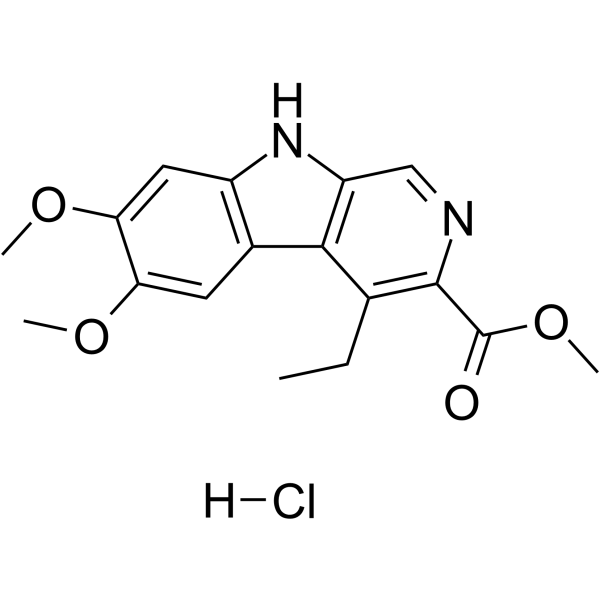 0 ImagesDMCM hydrochloride is a nonselective full inverse agonist of benzodiazepine. DMCM shows bnding afinity at human recombinant GABAA αxβ3γ2 receptor subtypes with Kis of 10 nM, 13 nM, 7.5 nM, 2.2 nM for α1, α2, α3, and α5 receptors, respectively.
-
Bretazenil
 0 ImagesSynonyms: Ro 16-6028Bretazenil (Ro 16-6028) is a partial agonist at the gamma-aminobutyric acid A (GABAA) receptor-linked benzodiazepine site. Bretazenil is potent benzodiazepine examined, exhibiting an IC50 (concentration at which half-maximal inhibition of specific [35S]TBPS binding occurs) of 6.1 nM. Bretazenil shows an EC50 of 10 nM for recombinant α1β1γ2. Anticonvulsant effects.
-
α-Casozepine
 0 Imagesα-Casozepine is an orally effective anxiolytic that binds to the benzodiazepine site of the GABAA receptor in bovine samples with an IC50 of 88 μM. α-Casozepine exerts anxiolytic and anti-stress effects on cats exposed to unfamiliar environments and dogs undergoing road transport. α-Casozepine exhibits significant anxiolytic activity in rats. α-Casozepine can be used in studies related to fear, anxiety and stress.
-
L-838417
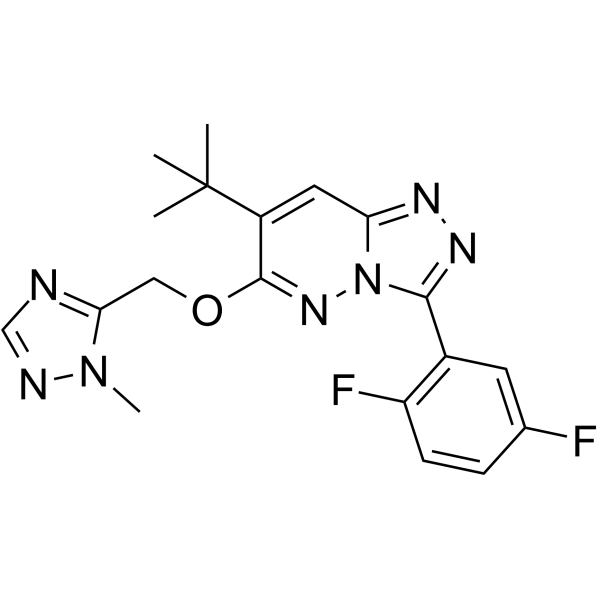 0 ImagesL-838417 is a selective partial agonist at the α2, α3 and α5 subtypes of the GABAA receptor and an antagonist at the α1, with binding Ki values of 0.79 nM, 0.67 nM, 1.67 nM, 267 nM, 2.25 nM and 2183 nM for α1β3γ2, α2β3γ2, α3β3γ2, α4β3γ2, α5β3γ2 and α6β3γ2. L-838417 has anti-anxiety activity.
-
CLH304a
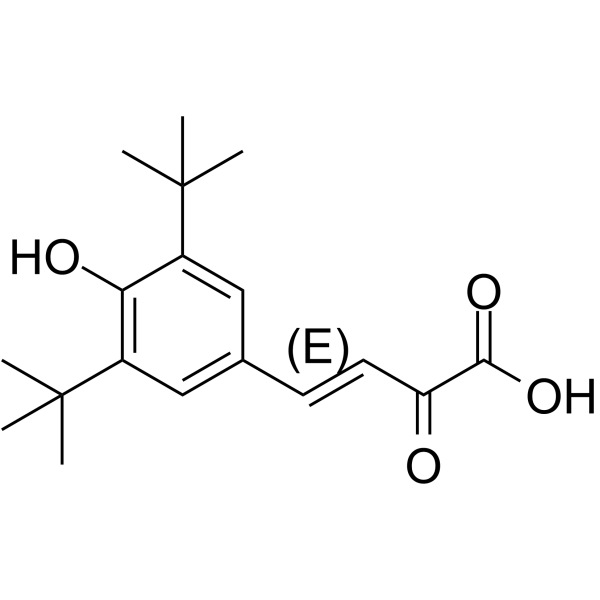 0 ImagesSynonyms: (E)-GABAB receptor antagonist 1CLH304a (compound 14) is a specific and noncompetitive GABAB receptor negative allosteric modulator (NAM). CLH304a decreases GABA-induced IP3 production with an IC50 of 37.9 μM. CLH304a has no effect on other GPCR Class C members such as mGluR1, mGluR2, and mGluR5. CLH304a acts on the heptahelical domain of GB2 subunits and non-competitively inhibits the effect of agonists with inverse agonist properties. CLH304a inhibits Baclofen (HY-B0007)-induced ERK1/2 phosphorylation in HEK293 cells overexpressing GABAB receptor.
-
3-Aminopropylphosphonic acid
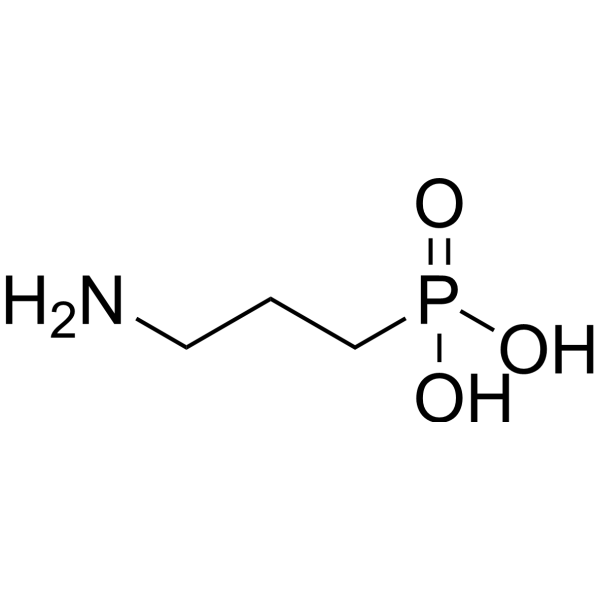 0 ImagesSynonyms: (3-Aminopropyl)phosphonic acid3-Aminopropylphosphonic acid ((3-Aminopropyl)phosphonic acid) is a phosphonic acid analogue of GABA and a GABAB receptor agonist.
-
Tracazolate hydrochloride
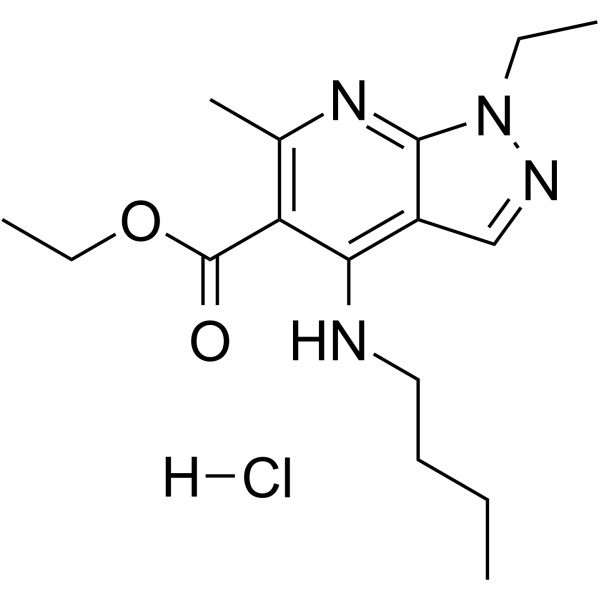 0 ImagesSynonyms: ICI 136753 hydrochlorideTracazolate (ICI 136753) hydrochloride is a potent GABAA receptor modulator. Tracazolate hydrochloride has selectivity for β3 and potentiates α1β1γ2s (EC50=13.2 μM), α1β3γ2 (EC50=1.5 μM). Tracazolate hydrochloride has the potency (EC50) determined by the nature of the third subunit (γ1-3, δ, ε) within the receptor complex. Tracazolate hydrochloride possesses anxiolytic and anticonvulsant activity.
-
S-(+)-GABOB
 0 ImagesCat. No.: HY-W050122CAS No.: 7013-05-0S-(+)-GABOB is an endogenous ligand with antiepileptic activity. S-(+)-GABOB is a metabolite of GABA and may function as a neurotransmitter. S-(+)-GABOB behaves as a full agonist when bound to the ρ(1) wild-type receptor. S-(+)-GABOB acts as a competitive antagonist in the ρ(1) T244S mutant receptor.
-
Arecaidine hydrochloride
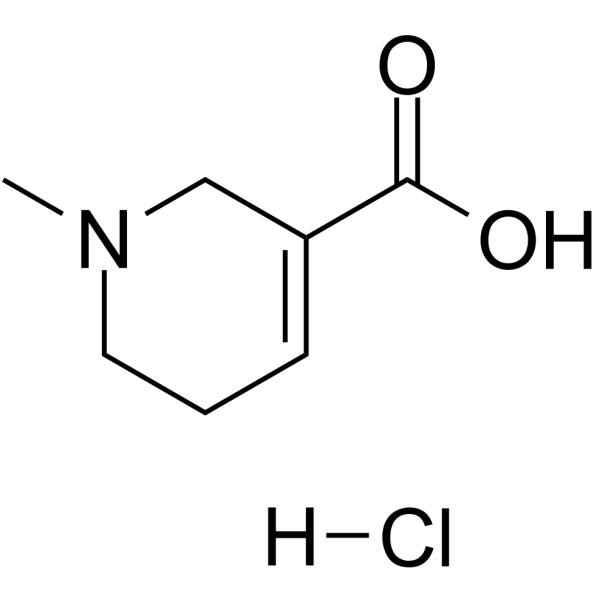 0 ImagesArecaidine hydrochloride is a GABA transport system inhibitor. Arecaidine hydrochloride inhibits the proliferation of oral mucosal fibroblasts, increases the secretion of IL-6, TGF-β and TNF-α in cells, downregulates the expression of PPAR-γ and PCK1 in cells, and upregulates the expression of TGF-β1. Arecaidine hydrochloride inhibits the uptake of γ-aminobutyric acid and β-alanine by the central nervous system of cats. Arecaidine hydrochloride inhibits hPAT1-mediated L-[3H]proline uptake in cells. Arecaidine hydrochloride can be used in research related to neurological diseases.
-
Picamilon
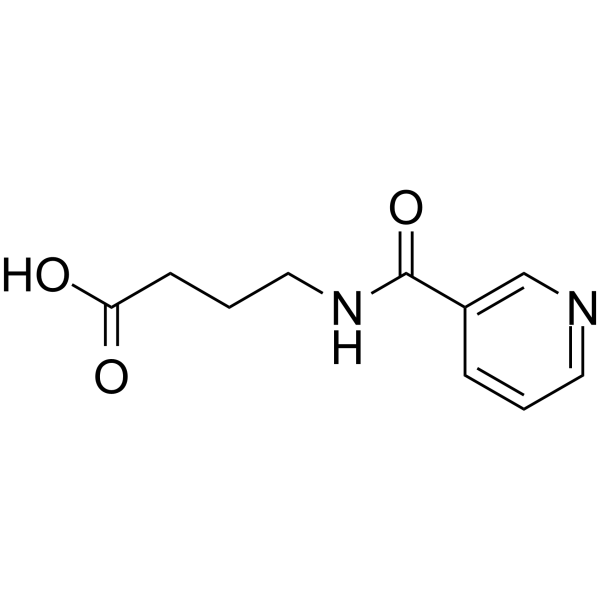 0 ImagesSynonyms: Nicotinoyl-GABA; Nicotinoyl-γ-aminobutyric acidPicamilon is an orally active derivative of γ-aminobutyric acid that has nootropic effect. Picamilon improves the epilepsy model in rats and promotes correction of functional disorders of the pancreas during Alloxan (HY-W017227)-induced diabetes mellitus in rats.
-
Dipropofol
 0 ImagesDipropofol is a dimeric derivative of Propofol (HY-B0649) with antioxidant and antibacterial activities. Dipropofol terminates free radical chain reactions, scavenges DPPH free radicals and inhibits lipid peroxidation. Dipropofol protects cells from death induced by glutamate, Aβ(25-35) and buthionine sulfoximine, and increases the survival rate of mice exposed to oxygen. Dipropofol selectively activates tonic GABAA currents, hyperpolarizes resting membrane potential, reduces action potential firing, and alleviates the severity of seizures induced by Kainic acid. Dipropofol can be used in the research of Gram-positive bacterial infections, Alzheimer's disease, cerebral ischemia-related neuronal injury, oxygen toxicity and temporal lobe epilepsy.
-
6-Methoxyflavanone
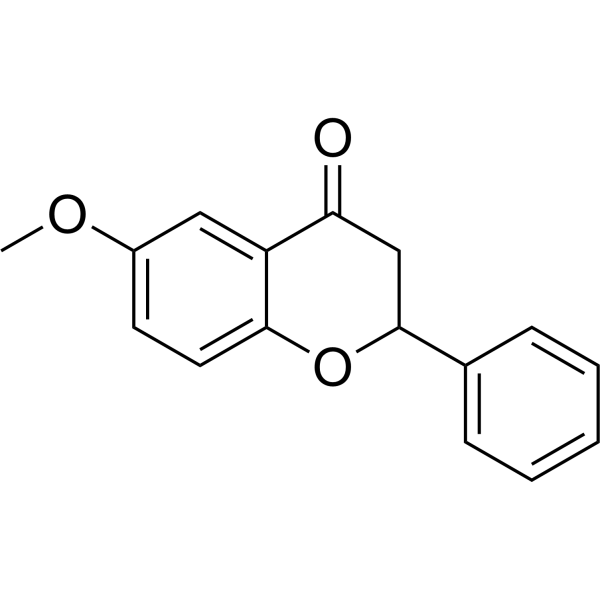 0 Images6-Methoxyflavanone (6-MeOF) is a flavonoid compound that can cross the blood-brain barrier. 6-Methoxyflavanone is a positive allosteric modulator of GABAA receptors. 6-Methoxyflavanone exhibits positive allosteric regulatory effects on human recombinant α1β2γ2L and α2β2γ2L GABAA receptors, and is relatively inactive on the α1β2 GABAA receptor. 6-Methoxyflavanone showes inhibitory behavior towards the activation of bitter receptor hTAS2R39 and hTAS2R14, demonstrating a reversible and non-overcome antagonistic effect. 6-Methoxyflavanone has the effects of anti-anxiety, analgesia and relief of neuropathic pain.
-
α-Androstenol
 0 ImagesSynonyms: 5α-Androst-16-en-3α-olα-Androstenol (5α-Androst-16-en-3α-ol) is a steroid pheromone that has been found in boar testes and male axillary sweat. α-Androstenol is also a positive allosteric modulator of GABAA receptors, which enhances GABA-activated currents in primary mouse cerebellar granule cells (EC50 of 0.4 μM). α-Androstenol produces anxiolytic-like, antidepressant-like, and anticonvulsant effects in mice. α-Androstenol can be used for the research of seizures.
-
4-Acetamidobutanoic acid-d3
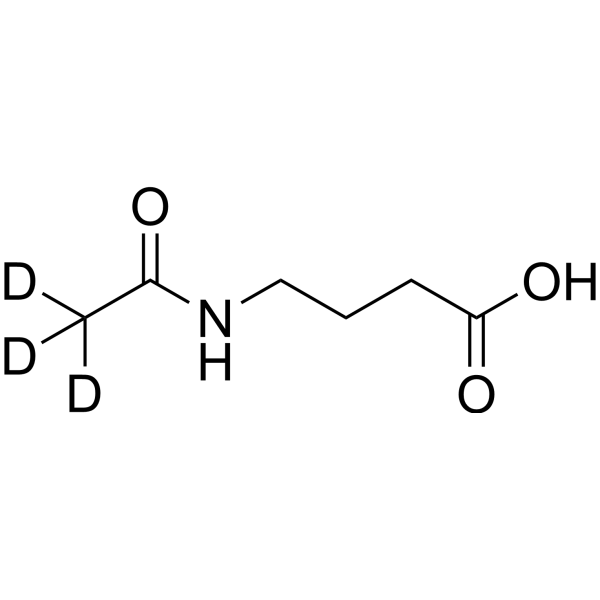 0 ImagesCat. No.: HY-101411SSynonyms: N-acetyl GABA-d34-Acetamidobutanoic acid-d3 is the deuterated analog of 4-Acetamidobutanoic acid (HY-101411). 4-Acetamidobutanoic acid (N-acetyl GABA), the main metabolite of GABA, exhibits antioxidant and antibacterial activities.